

Artesanos y artistas mexicanos dan vida al Royal Ontario Museum (ROM)
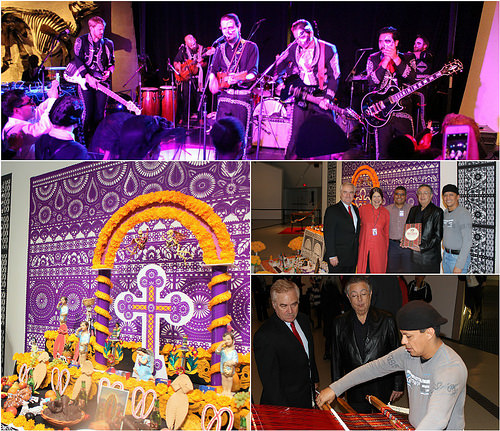
Los artesanos y artistas mexicanos dieron vida y color al Royal Ontario Museum (ROM) durante una jornada de eventos titulada Celebrating Mexico’s, Day of the Dead.
El ROM considerado uno de los museos más grandes de América del Norte, congregó a más de cinco mil personas, el pasado viernes 30 de octubre, quienes pudieron disfrutar y conocer una muestra de la cultura mexicana.
En el marco de las exposición “¡Viva México! Clothing and Culture”, que se exhibe desde el mes de mayo, la curadora de la exhibición Chloe Sayer, presentó su libro ¡Viva México! Clothing and Culture, el cual ofrece una introducción académica en el campo de la cultura de los textiles. El libro contiene ilustraciones de la vasta colección de textiles mexicanos con la que cuenta el ROM, muestra la evolución del vestido tanto masculino como femenino en nuestro país, así como la gran variedad de técnicas utilizadas por los hilanderos, tintoreros, tejedores y bordadores. En su presentación comentó el trabajo en cartón, cerámica, barro y papel, entre otros que realizan varias familias mexicanas oriundas de diferentes estados de la República, a la vez que proyectó diversas fotografías con las tradiciones en el Día de Muertos.
Asimismo, el artesano Arturo Estrada Hernández, originario de Santa María del Río, San Luis Potosí, quien se dedica a trabajar los telares y la creación del rebozo mexicano, demostró durante 18 días al público canadiense su talento e invocación en la elaboración de sus rebozos. El tejedor lleva 36 años elaborando rebozos de distintos hilos, colores y diseños, utilizando un procedimiento propio y denominándolos de acuerdo a su inspiración. Actualmente, apoyado por el gobierno de San Luis Potosí y por el Servicio Nacional del Empleo, también se dedica a dar cursos a jóvenes sobre la elaboración del rebozo
Por su parte, el artesano mexicano Sergio Hernández Martínez, originario de Metepec, Estado de México, quien trabaja el arte del papel picado desde hace 25 años, realizó el montaje del tradicional altar de muertos, el cual se distinguió por su colorido y alegría. Igualmente, demostró a los asistentes su obra en papel picado con las tres técnicas que utiliza para cortarlo: tijeras, navajas y cincel. El artesano ha representado a su municipio en Japón, Suiza, China y Francia.
La celebración nocturna incluyó presentaciones de artistas y grupos musicales mexicanos, principalmente residentes en Toronto e identificados por el público por su talento, entre los que destacan: Mariachi México Amigo de Jorge López; grupo de rock Los Poetas; cantante de boleros Mamselle Ruiz; y el grupo de mariachi y jazz The Mariachi Ghost.
- Detalles
El Consulado General de México en Toronto entregó el Reconocimiento Ohtli
El Consulado General de México en Toronto entregó el Reconocimiento Ohtli
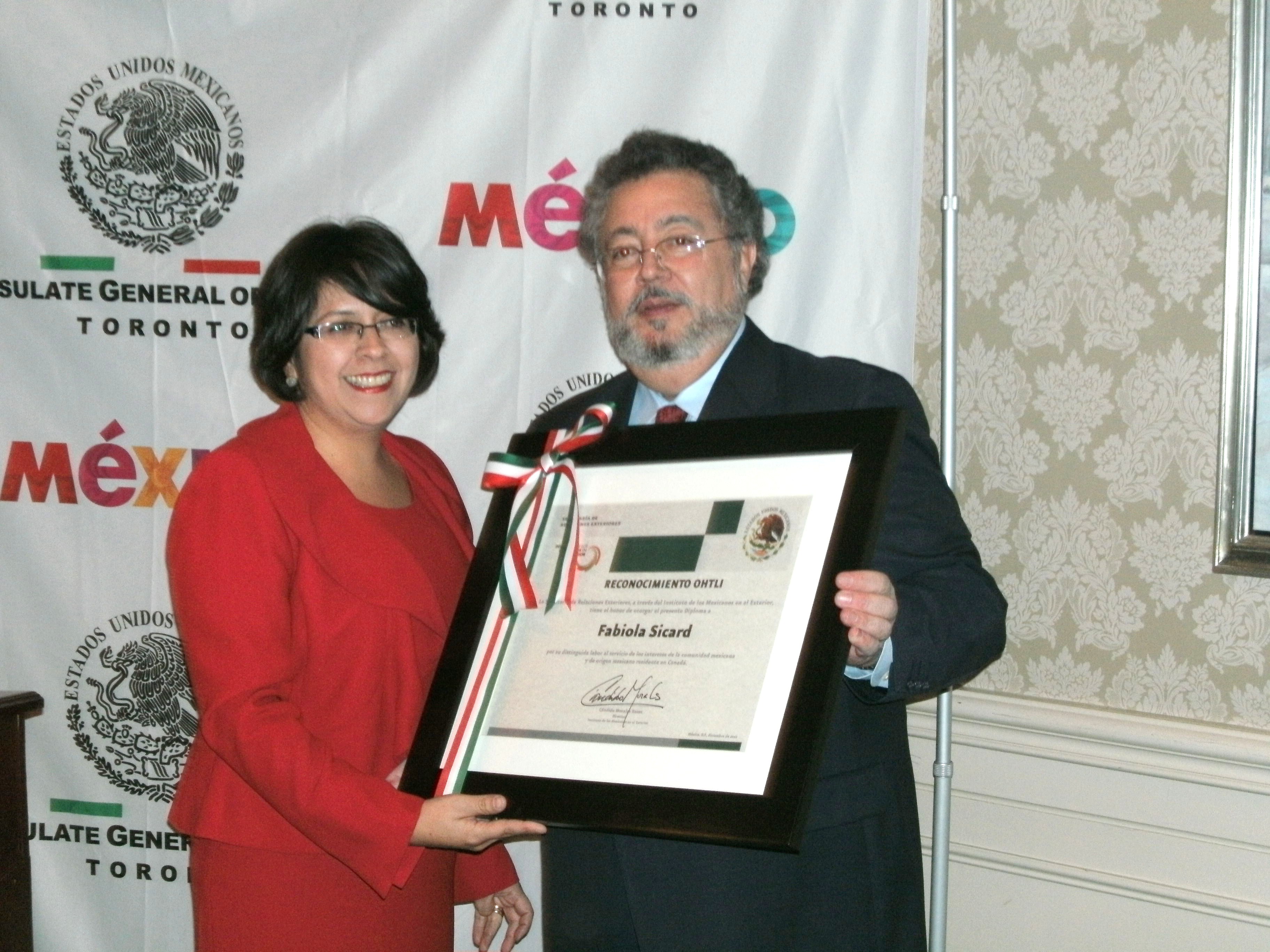 Este Consulado General hizo entrega del reconocimiento Ohtli a la Sra. Fabiola Sicard, Directora de Mercados Latinoamericanos en la Banca Multicultural de Scotiabank, el pasado 2 de diciembre en una ceremonia que congregó a invitados de los sectores académicos, culturales, comunitarios, empresariales, cuerpo diplomático y representantes de los medios de comunicación hispanos.
En el evento, el Cónsul General Mauricio Toussaint reconoció la trayectoria de la Sra. Sicard, quien es responsable de definir e implementar las estrategias del banco para el mercado latinoamericano en Canadá. Asimismo, destacó el rol de la galardonada dentro de la comunidad canadiense por ser una mujer latinoamericana que con pasión demuestra el enorme potencial y el éxito de la gente de esa región.
La Sra. Sicard se ha caracterizado por su enorme determinación para impulsar la presencia y el avance de los mexicanos, siempre luchando por la integración de la comunidad, especialmente en Toronto. En su tarea, procura renovar la imagen y destacar las contribuciones que hacen a la sociedad canadiense, lo cual enriquece a las dos naciones.
La Sra. Sicard es egresada en Contabilidad del Instituto Tecnológico Autónomo de México (ITAM) y cuenta con una maestría en negocios por la Escuela Schulich de Toronto. Asimismo, forma parte de la Asociación de Latinoamericanos de Schulich, es Vicepresidenta para Asuntos Externos de la asociación LAMBA, integra el Consejo de la Cámara de Comercio Hispana de Toronto y participa de manera activa en las organizaciones de mexicanos establecidas en Toronto.
La entrega de dicho reconocimiento a tan destacada y exitosa mujer mexicana, es un reconocimiento a los años de desinteresado apoyo y dedicación a la comunidad mexicana.
- Detalles
Maya: Secrets of their Ancient World premieres at the ROM on November 19
Maya: Secrets of their Ancient World premieres at the ROM on November 19
 The Royal Ontario Museum (ROM) premieres Maya: Secrets of their Ancient World on Saturday, November 19, 2011. On display in the ROM’s Garfield Weston Exhibition Hall until Monday, April 9, 2012, this original exhibition vibrantly brings to life the Classic Period (250 - 900 CE) of this ancient Mesoamerican culture.
The exhibition was unveiled to the media yesterday morning at an event hosted by ROM Director and CEO Janet Carding. Special guests in attendance included the Hon. Michael Chan, Ontario’s Minister of Tourism and Culture, His Excellency Francisco Javier Barrio Terrazas, Ambassador of Mexico to Canada, and Ambassador Mauricio Toussaint, Consul General of Mexico in Toronto, Miriam Kaiser, Exhibitions Director from the National Institute of Anthropology and History (INAH), Martha Cuevas, Roberto López (INAH), Justin Jennings (ROM) curators of the exhibit, and Marco Carvajal, Museums Director from Campeche, as well as a number of representatives from the ROM’s collaborators and the Canadian Museum of Civilization (CMC).
The exhibition is an international collaboration between the ROM, INAH, and the CMC. Nearly 250 artifacts have been assembled, including large sculptures, ceramics, masks, and jewellery, to illuminate the relationships between the Maya ruling class and the balance of its society. The objects also reveal numerous aspects of Maya life, which, until the end of the 19th century, had been shrouded in mystery. Maya city states, palace life, and rituals and beliefs, including a timely look at what they thought would occur in the year 2012, are all examined in the exhibition.
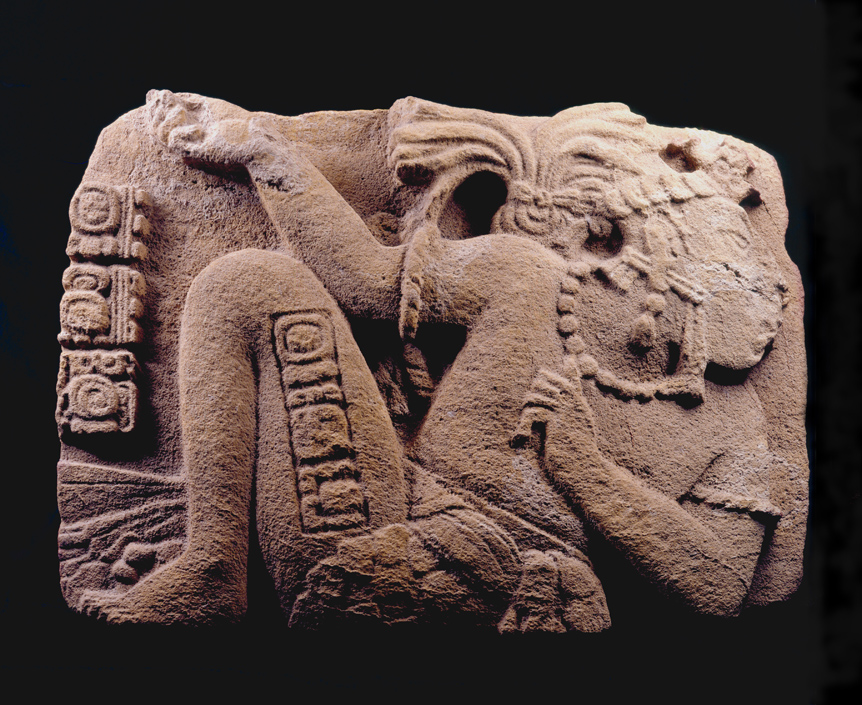
Most of the exhibition’s objects have been selected from numerous Mexican museums in the Yucatan Peninsula region where the Maya mainly live, while others are of the ROM’s own renowned holdings. Prominent institutions, including the British Museum, Princeton University Art Museum, and Toronto’s own Gardiner Museum have also loaned artifacts. Most of the showcased objects have never before been seen in Canada, and many, some only recently excavated, are recognized as among the most significant archaeological finds of the Maya civilization. Among these is the limestone Tablet of the Warriors from Temple XVII depicting a captured warrior kneeling in front of a king from Palenque. Following painstaking conservation efforts by ROM and INAH colleagues, the object’s three panels have been brought together for the first time and make their public debut at the ROM.
Janet Carding, the ROM’s Director and CEO, states, “This ancient culture, one of astonishing achievement. has long held deep fascination and its allure persists to this day. The more we learn of the Maya, the more our admiration grows. In collaboration with our partners, the CMC and INAH, the ROM is pleased to present a collection of notable artifacts conveying the Maya story, one that is evolving to the present day.”
Dr. Justin Jennings, Curator of New World Archaeology in the ROM’s World Cultures department and the ROM’s exhibition curator, says, “Our inclusion of recently excavated artifacts from the famed city centre, Palenque, is particularly exciting. Some of these have never before been publicly displayed, not even in Mexico. Others rarely travel; among these are two exquisitely carved stone doorway lintels, loaned by the British Museum, vividly depicting the blood sacrifices performed by Maya nobles.”
"Ontario welcomes this truly international exhibit presented at the ROM, a truly international museum! Maya: Secrets of their Ancient World will attract visitors from within our borders and beyond as audiences explore a civilization that has impacted, influenced and inspired generations," said Michael Chan, Minister of Tourism and Culture. "The McGuinty Government commends the international collaboration and cooperation undertaken by Mexico's National Institute of Anthropology and History, the Canadian Museum of Civilization, and the ROM for their efforts in sharing an ancient and honoured history with the people of Ontario."
Following the ROM’s engagement, the exhibition travels to the Canadian Museum of Civilization from May 18 to October 28, 2012.
BACKGROUND
Widespread interest in the ancient Maya world first occurred in the mid-19th century with the discovery of foliage-clad temples and sculptures among extensive ruins at several sites in Mexico and Central America. Since then, archaeologists have unravelled numerous mysteries and resolved many questions regarding the Maya, even as more take their place. The first Maya villages are known to have been settled by approximately 1000 BCE, with sites growing in both size and intricacy as their populations increased. By 500 BCE, the Maya world was populated by the elaborate pyramids, intricate tombs, and other spectacular architecture so closely associated today with the ancient culture.
The Maya’s important artistic and intellectual achievements reached their height during its Classic Period (250 – 900 CE). During that time, Maya society was organized around rulers at cities such as Calakmul, Tikal, Copán and Palenque. Unlike other ancient civilizations such as the Aztec, the Maya civilization was never an “empire” united by a single governing body. Instead, numerous independent city states, sharing comparable traits, beliefs, and practices were all considered Maya. Spread across expansive areas, these sites were in constant conflict with one another. While the cities’ rulers ensured that many monuments were built in their honour, temples, plazas, and palaces were often built for the purpose of enticing groups of people such as farmers, traders, and artisans to inhabit or visit the city centres. Many reasons accounted for the people’s support of Classic Maya centres; the most likely explanation being the population’s core belief that the rulers performed duties essential for life.
Near the beginning of the ninth century, the people’s confidence in the rulers began to wane, with the total collapse of Classic Maya society occurring over nearly two centuries. Sparked by overpopulation, increasing warfare, environmental degradation and drought, the definitive end of Maya royalty was likely fuelled by a crisis of faith: an increasingly desperate people no longer believed that their rulers were linked to the divine. However, significant traits of Maya culture remain and are seen in contemporary Maya communities. The languages spoken, the ritual calendar followed, and their striking profiles, are among the characteristics linking today’s Maya to their ancient ancestors.
THE EXHIBITION
The exhibition takes a thematic approach through seven distinct sections: The Maya World, The City, Cosmology and Ritual, Writing and Timekeeping, The Palace, Death, and Collapse and Survival. Each area fully immerses the visitor in the Maya environment through significant artifacts and effective presentation techniques that dramatically recreate the environment in which the Maya lived. Shot on location in Mexico, numerous ROM-produced videos expand on integral themes including the deciphering of hieroglyphs; the Classic Maya cosmos; and the persistent mysteries surrounding the Maya Calendar Countdown to 2012.
Following a dramatic Introduction, The Maya World explores the manners in which the people lived, farmed and hunted. It also establishes that the Maya succeeded so well for so long by working with, rather than against, their often challenging environment, using a wide variety of techniques to sustain the population. The Maya are encountered through a number of objects including a collection of evocative stucco human heads, as well as a number of remarkable artifacts depicting the region’s animals. A charming lidded bowl with a duck’s head, and a ceramic whistle shaped as a bird, convey the respect accorded animals in Maya society.
Palenque, the renowned Maya city centre is highlighted in The City, making use of a touchable scale model, maps, photos, city site plans, murals, and a video on the archaeology at Palenque and its recent excavation by INAH’s exhibition curator Martha Cuevas García. The main traits of a typical Maya city are examined here, including a palace, temple-pyramids, tombs, public spaces, as are activities such as trade, warfare (and sacrifice), recreation, and fashion. Objects here include a whimsical ballplayer and the haunting figure of a captive—bringing into focus the Maya's goal of capturing an opponent in warfare. The section also highlights an important ancient Maya commodity: chocolate. Maya elite drank a wide variety of fermented maize-based drinks, augmented by chocolate (cacao) during festivals. Dated to 600 – 900 CE is a ceramic lid on which a quirky spider monkey sits, jealously guarding the prized cacao seeds that were likely contained in the long-gone pot.
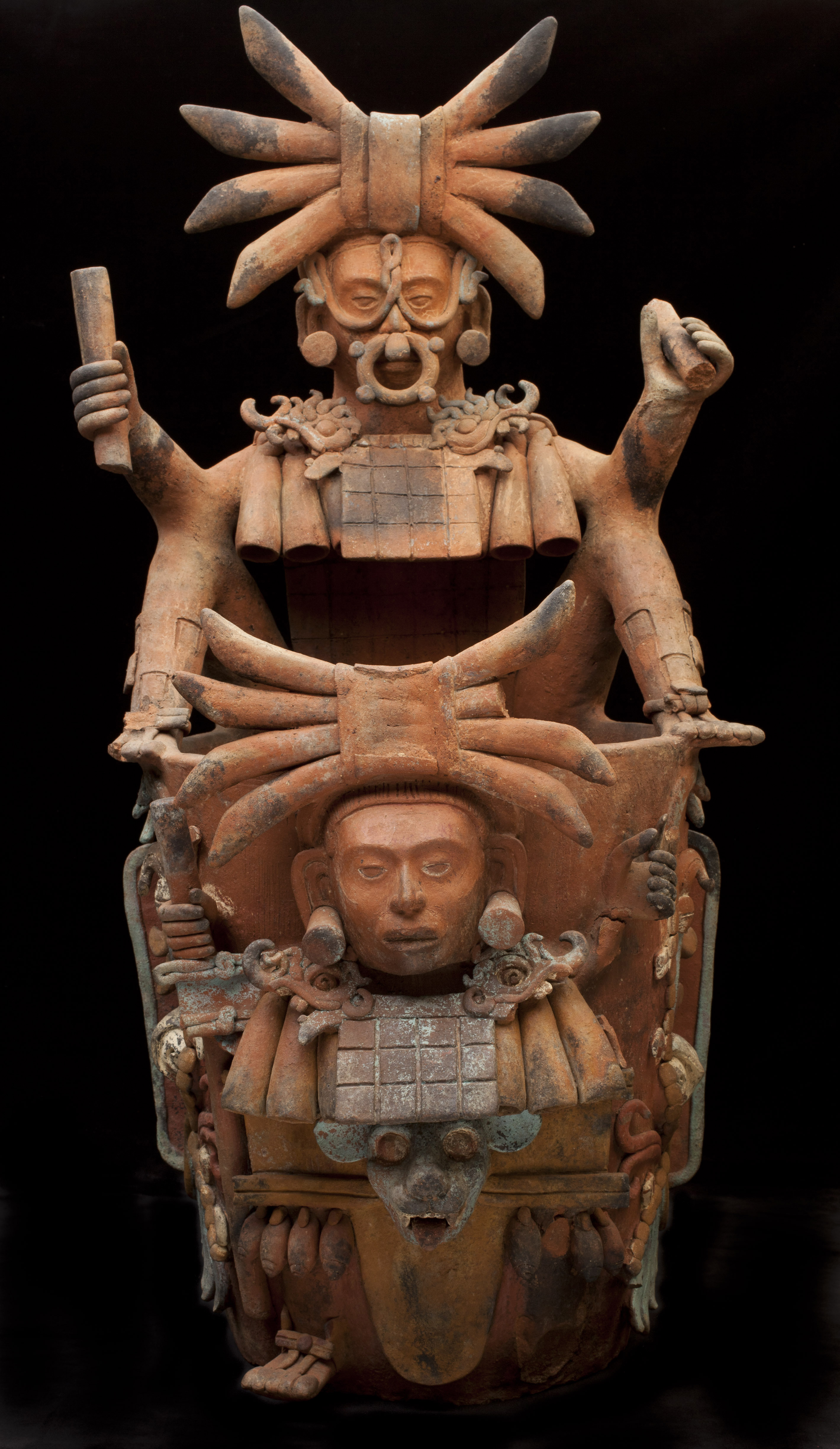
Cosmology and Ritual highlights that ritual activities permeated all areas of Maya life. Most cosmological forces, significant earthly events, and religious rites were tied to deities, to time, and to celestial movements through the Maya calendar. Many rituals were reserved for monarchs, linking them to the gods, relationships indispensable to societal survival. Some of these rituals involved blood-letting, a form of auto-sacrifice to better commune with ancestors. Among the objects displayed in this section are large, striking incense burners, or censers, adorned with representations of ancestral and divine persons.
Writing and Timekeeping illustrates that, while the Maya did not invent writing or the calendar, they advanced these disciplines to high levels of sophistication. Most inscriptions on objects and monuments glorified rulers, commemorating significant events in their lives. A video highlights that nearly 80% of the Maya’s approximately 900 known signs have been deciphered, to date. This section includes a spotlight on the Maya calendar and the enduring 2012 end of days legend.
Courtly Life continues to explore the complex royal lifestyle of the Classic Maya elite. The rituals of courtly life are vividly depicted in scenes painted on ceramics, providing a rich source of information on Maya daily life. A beautifully decorated bowl, dated to 600 – 900 CE, portrays a person drinking at a banquet. Celebrating events such as births, marriages, deaths, harvests, and diplomatic alliances, these feasts showcased their organizers’ powers. This section demonstrates the Maya rulers’ constant engaging in rituals to justify their dominant roles in society and establish their relationships with gods and ancestors. Imposing limestone panels, dated to 600-900 CE, clearly illustrate these associations, combining the past and present, the dead and living, and the natural and supernatural.
In Death and Burial, a tomb-like atmosphere pervades. This section highlights the mid-20th century revelation that many Maya pyramid-temples were actually tombs. As in many ancient cultures, Maya elite were buried with goods meant as offerings to assist them on their journey into the afterlife. Discovered in these royal burials, these extraordinary artifacts underscore the Maya belief that, for the chosen few, death initiated a new phase of existence. Section highlights include a funerary mask, made of jade, shell, and obsidian, depicting a Palenque queen.
In Collapse and Survival, a broken altar and a shattered hieroglyphic panel are both poignant reminders of the once-flourishing culture. A limestone stela from Toniná displays the last-known Long Count date. By the end of the ninth century, many Maya cities were in rapid decline and the tradition of Long Count dating abruptly stopped. This stela’s eroded front depicts the city’s last ruler, while the glyphs on its back read 10.4.0.0.0. or January 15, 909 CE. Soon after, Toniná’s royal dynasty fell, its palaces and temples abandoned. Other objects showcased include a stunning pedestal jar, unearthed in 1974 by ROM curator David Pendergast at the site of Lamanai, Belize. The object is adorned by an effigy combining features of K’awiil, the god of royalty, and Chaahk, the Rain God. Excavated from a pit associated with a man’s burial, this jar, found in pieces, has been meticulously restored by museum conservators.
The exhibition concludes with a positive message: while the Spanish Conquest had a shattering impact on the Maya, the culture has managed to preserve their language, land, and culture ever since. Today, modern Maya number approximately ten million, found in present- day Mexico, Belize, El Salvador, Guatemala and Honduras. The Maya, once again, are a vigorous culture, inspired by their ancestors’ great achievements.
OTHER INFORMATION
Throughout the exhibition, the story of the Maya story is dramatically conveyed by numerous ROM-produced audio-visual installations. Shot on location in Mexico by a ROM team and featuring ROM curator Dr. Justin Jennings, as well as INAH curators, the installations expand on a number of the exhibition’s themes, including the deciphering of hieroglyphs; the Classic Maya cosmos; and the ongoing mysteries surrounding the Maya Calendar Countdown to 2012.
The whole family will enjoy searching for mysterious objects on the Family Adventure Trail and discovering numerous touchable reproductions in the exhibition. Maya-themed activities abound during ROM for the Holidays, this year taking place daily from 11:00 am to 4:00 pm from December 26, 2011 through January 8, 2012. Activities include Maya make-and-take crafts, creating your own rain stick, chance encounters with a Maya High Priest, and posing in a fun Maya-themed photo opportunity. From December 28 to 30, the SONY® photo station offers visitors the chance to take away mementos of themselves as the Jaguar God of the Underworld! Film and music complete the Maya experience while Earth Rangers and their Bring Back the Wild live animal show and Ontario Winter Wonderland brings visitors back to a colder climate. From Friday, January 6 at 5:00pm to 10:00am the following day, ROM Sleepover: Maya provides the ultimate exhibition backstage pass. After-hours exhibition access is just one highlight of this Maya edition of the highly popular series. A graphic novel, an engaging way to learn about the ancient Maya, is available for downloading at www.rom.on.ca/maya. Much more family programming, including for March Break and Family Day Long Weekend, is to be announced.
Associated public programs accompany the exhibition throughout its engagement. The Maya Distinguished Lecture Series, a series of lectures delivered by leading authorities, explores many aspects of Maya society, including its political organization, its Royal Court, its rise and fall, and, of course, the Maya end of days mystery of 2012. The exhibition’s sold out lead lecture was delivered by Pulitzer Prize-winning Jared Diamond on November 1. A presentation of the Institute for Contemporary Culture (ICC), the sixth annual Eva Holtby Lecture on Contemporary Culture took place on November 14 and featured Carlos Fuentes, one of the Spanish-speaking world's most renowned novelists and essayists .
The ROM is committed to accessibility for all visitors and has developed an Accessibility Strategy outlining the Museum’s promise to remove barriers to participation for its visitors with varying disabilities. Maya: Secrets of their Ancient World offers visitors who are blind or who have vision loss the opportunity to explore 14 touchable reproductions resembling Maya sculptures, ceramics and masks. These include a stunning model of a coffin lid illustrating the rebirth of Janaahb’ Pakal, a scaled model of a Chac Mool altar, and a sample of beautiful Maya glyphs. Braille and large font labels identify the exhibition’s touchable reproductions. For visitors who are deaf, deafened or hard of hearing, all narrated videos include English and French captioning. The exhibition’s two mini-theatres are equipped with acoustical containment. Additionally, for those visitors who use hearing aids and cochlear implants, hearing loop technology is available for special paid-tours upon request. For specific questions or concerns, the ROM can be contacted at 416.586.8000 prior to visiting. For visitors who are deaf, deafened or hard of hearing, Bell Relay Service can be reached by dialing 711 or 1.800.855.0511.
ROM Members already know that the best way to experience the Museum is through Membership and its numerous benefits, including free unlimited admission for members, special discounts for shopping, dining, programs, and more at the ROM. The Maya Member Preview, taking place on Friday, November 18, offers Members the chance to meet and enjoy presentations by Dr. Justin Jennings, the ROM’s exhibition curator.
Timed tickets to the exhibition are available at 30-minute intervals. Admission to the exhibition at the ROM's newly lowered prices: Adults: $25; Seniors & Students: $22.50; Children: $17; Children 3 & under and Members: Free. Presented by Sun Life Financial, best value ROM Friday Nights are in effect every Friday evening from 4:30 to 8:30 pm with reduced exhibition admission: Adults: $19, Seniors & Students: $17, Children: $11. Exhibition hours are the same as general ROM hours: daily from 10:00 am to 5:30 pm and Friday from 10:00 am to 8:30 pm, with last Maya entry an hour and a half prior to Museum closing. Special extended hours are offered for the holidays when our Friday Nights discounted pricing will be in effect every day from 4:30 pm to 8:30 pm from December 26, 2011 to January 7, 2012. Groups of 20 or more may call ROM Group Sales at 416.586.5801 (ext 2) or email Esta dirección de correo electrónico está siendo protegida contra los robots de spam. Necesita tener JavaScript habilitado para poder verlo. for information on special rates, private lectures, guided tours and themed menus. School groups should visit www.rom.on.ca/schools or call ROM Education at 416.586.5801 (ext 1) for information on school visits.
- Detalles
Se exhiben 250 piezas de la civilización Maya en el Royal Ontario Museum
Se exhiben 250 piezas de la civilización Maya en el Royal Ontario Museum
El pasado 19 de noviembre se inauguró con gran éxito la exposición “Maya: secrets of their Ancient World” en Royal Ontario Museum (ROM), donde permanecerá hasta el 9 de abril del 2012, cuando será trasladada a Ottawa para ser exhibida en el Canadian Museum of Civilizations (CMC), del 18 de mayo al 28 de octubre de 2012.
La presentación a los medios de comunicación fue el 16 de noviembre, con interesantes participaciones de los representantes de los museos, curadores de la exposición y funcionarios del gobierno de Ontario.
Esta magna exposición fue preparada exclusivamente para Canadá y es el resultado de un convenio de colaboración entre el Instituto Nacional de Antropología e Historia de México (INAH), con el ROM y el CMC.
La muestra exhibe alrededor de 250 piezas originales sobre la cultura maya, la mayoría de ellas provenientes de México y sus diferentes museos nacionales y regionales.
Muchas de las piezas son exhibidas por primera vez en la historia, algunas de las cuales incluso no han sido exhibidas en México, por tratarse de hallazgos realizados recientemente.
La muestra incluye esculturas, máscaras, cerámicas y objetos de distinta índole asociados a las ciudades, templos y palacios mayas, varios de los cuales datan del periodo clásico (250 a 900 DC) y ha sido enriquecida con aportaciones del ROM y museos de Europa y Estados Unidos.
La exhibición cuenta además con espacios interactivos para beneplácito de los niños.
“Entre más conocemos de los Mayas más los admiramos”, dijo la directora del ROM, Janet Carding, al presentar a los medios canadienses la exposición, que es resultado de dos años de trabajo entre curadores del INAH, del ROM y del CMC.
“A pesar del fuerte impacto que tuvo la Conquista española en la civilización Maya, ésta ha podido preservar su lengua, su tierra y su cultura a lo largo de los años”, señaló la directora del ROM.
La arqueóloga Martha Cuevas y el arqueólogo Roberto López fueron los curadores del INAH que trabajaron con sus contrapartes canadienses, Justin Jennings, del ROM, y Jean-Luc Pilon, del CMC.
A la presentación asistió también Michael Chang, Ministro de Cultura y Turismo de Ontario, quien dijo que hay un gran interés por conocer la riqueza de las civilizaciones pasadas. “Esta es una pieza del legado mexicano que queremos conocer”.
El curador canadiense Justin Jennings comentó que “al conocer más sobre los Mayas se tienen más detalles de cómo vivieron hace cientos de años”.
 Por su parte, el curador Roberto López Bravo comentó que esta exposición “fue una gran oportunidad de hacer una nueva selección de las piezas y de pensar cómo podemos hacer que la gente entienda más conceptos nuevos que tenemos de los Mayas”.
“En México tenemos una arqueología que avanza con muchos proyectos en diferentes lugares. Aquí exhibimos tres piezas de Palenque que recién se descubrieron”.
La curadora Martha Cuevas resumió que “uno de los grandes logros de esta civilización fue el desarrollo de un sistema de escritura y calendario, donde registraron los principales eventos relacionados con el ajaw o gobernante de cada entidad política”.
A la apertura asistieron también el Embajador de México en Canadá, Francisco Barrio; el Cónsul General en Toronto, Mauricio Toussaint; Miriam Kaiser, Directora de Exhibiciones del INAH, y Marco Carvajal, Director de Museos de Campeche.
En opinión del Embajador Barrio “esta exposición va a despertar más interés en los canadienses de viajar a esa región de México”.
En tanto, el Cónsul General Toussaint afirmó que “los canadienses podrán incrementar su interés y conocimiento de los mexicanos y su cultura a través de esta exposición, la cual les permitirá conocer cómo vivían los Mayas hace siglos y cómo viven ahora en el Sureste mexicano”.
La exposición está montada en forma interactiva con reproducciones de algunas piezas que pueden ser palpadas por el público, además de explicaciones en inglés, francés y braille, videos y la presentación del calendario maya en sistema multimedia.
Del 22 de noviembre al 20 de marzo del 2012 el ROM llevará a cabo lecturas de cosmovisión y arte maya a cargo de antropólogos de universidades de Canadá y Estados Unidos.
Recientemente el ROM disminuyó sus precios de admisión entre un 30% y un 38%. Este significativo descuento se aplica en la exposición “Maya: secrets of their Ancient World”.
Aproveche y no deje de admirar esta importante muestra, orgullo de los mexicanos.
Vea algunas fotos de esta magna exposición en: http://www.facebook.com/pages/Consulmex-Toronto/208189000547
La recepción del Consulado General
El Consulado General de México en Toronto realizó el 24 de noviembre en el Royal Ontario Museum una recepción y visita guiada con motivo de la exposición “Maya: the Secrets of their Ancient World”.
Al evento asistieron representantes de organismos culturales y financieros, instituciones académicas y diplomáticas, organizaciones mexicanas y empresarios.
En la recepción hicieron uso de la palabra el Cónsul General, Mauricio Toussaint, y el Vicepresidente del Royal Ontario Museum, Dan Rahimi.
Entre los asistentes estuvieron el Cónsul Adscrito, Santiago Mateos, y el representante de ProMéxico en Toronto, José Antonio Peral.
El acto estuvo amenizado por el grupo de son jarocho Café con Pan.
- Detalles
“Corazón de México” en Centennial College
“Corazón de México” en Centennial College
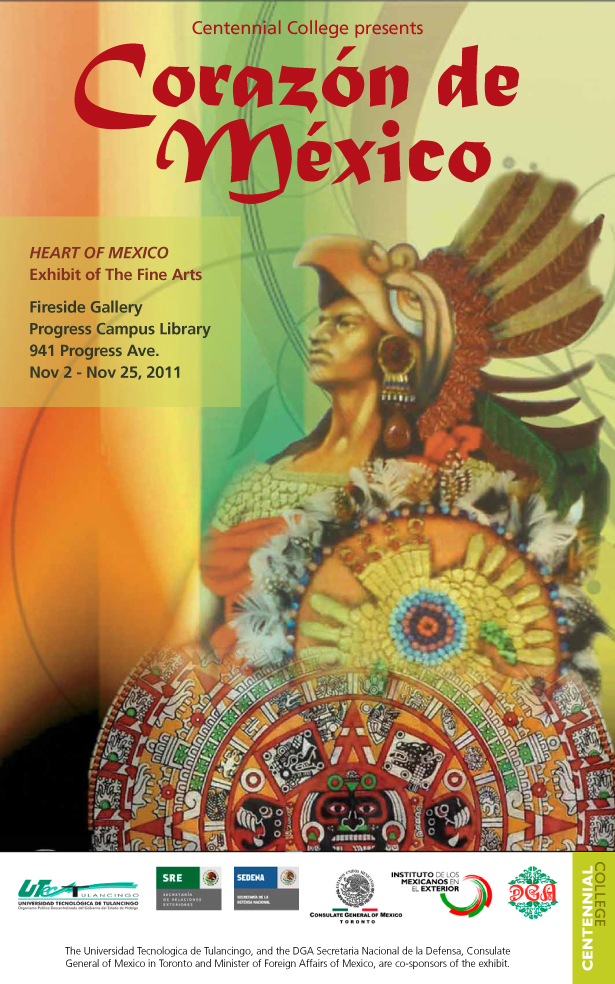
La exposición Corazón de México en el Centennial College (noviembre 2-25) se exhibirá al público gratuitamente e incluye 61 piezas de arte elaboradas por la Asociación Metropolitana de Artistas Plásticos, Visuales y Manuales, de la Universidad Tecnológica de Tulancingo, Hidalgo.
Lugar: Fireside Gallery, Progress Campus Library, 941 Progress Ave.
Copatrocinadores de la exposición: Universidad Tecnológica de Tulancingo, la Secretaria de la Defensa Nacional, Consulado General de México en Toronto y la Secretaría de Relaciones Exteriores.
Mayores informes: Esta dirección de correo electrónico está siendo protegida contra los robots de spam. Necesita tener JavaScript habilitado para poder verlo.
- Detalles